
Choosing rhododendron companion plants comes down to matching three things: acidic soil, steady moisture with good drainage, and dappled shade. A plant that misses on any one of them will either struggle next to your rhododendron or make it struggle.
The good news is that several shrubs, groundcovers, and ferns want the same conditions. This guide covers ten that fit, the kinds of plants to keep away, and how to arrange them around a rhododendron’s mature size.
Why pairings matter for rhododendron
Rhododendron is a woody shrub, evergreen or deciduous depending on the species, and it is picky about soil. It wants acidic, organic-rich ground that stays moist without sitting wet. Penn State gives roughly pH 4.5 to 6 as suitable for rosebay rhododendron, and the RHS describes rhododendrons in general as acid-soil plants. Both drought and waterlogging cause trouble.
Light matters just as much. Dappled or partial shade is what most rhododendrons prefer. A sheltered, brighter spot can work if the soil never dries out.
Size varies a lot, so check your plant’s tag before you plan anything. Rhododendron maximum (zones 5 to 8) can reach 5 to 20 feet, while ‘P.J.M.’ (zones 4 to 8) is listed at 3 to 5 feet and flowers in early spring. Confirm the hardiness of your specific cultivar for your zone.
One myth is worth clearing up: the idea that any shade plant makes a good rhododendron companion. The RHS advises choosing plants adapted to both acidic soil and the amount of shade you actually have. Too much shade slows growth and produces pale plants, and a hosta-style “it likes shade” rule won’t catch that.
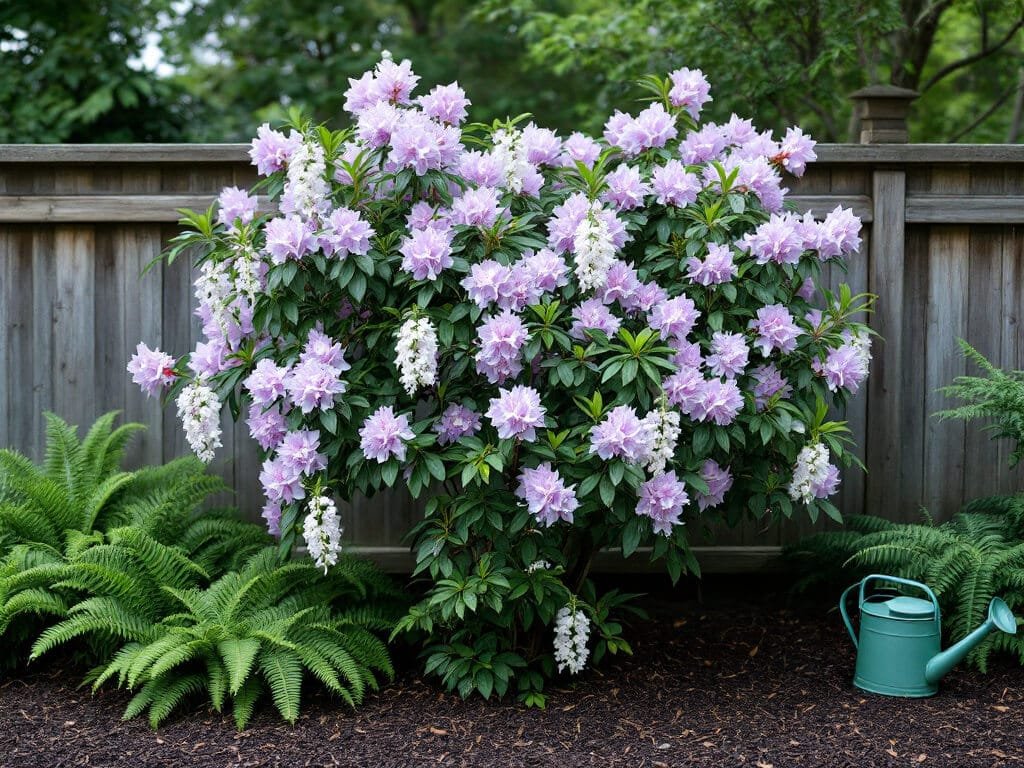
Best companion plants for rhododendron
None of the sources I’m working from give a universal rhododendron spacing figure, so spacing below follows mature size. Look up the mature width of both plants and leave room for each.
Pieris japonica
Pieris shares rhododendron’s acid soil and partial shade, so it makes a compatible shrub layer beside it. Set the spacing by the mature size of both plants rather than a fixed distance.
Camellia japonica
Camellia matches the acidic soil and shade conditions and extends the season of flower interest. Leave room for the cultivar’s mature width. Check that your chosen cultivar is hardy in your zone before you buy.
Andromeda polifolia ‘Compacta’
This is a compact acid-soil shrub suited to shade, useful beneath or near larger rhododendrons. Plant it outside the rhododendron’s eventual canopy spread so the bigger shrub doesn’t swallow it.
Leucothoe ‘Scarletta’
Leucothoe is an evergreen with shade-tolerant foliage that contrasts with rhododendron leaves and fills in a lower shrub layer. It also likes acidic soil. Space it according to the cultivar’s mature spread.
Mountain laurel (Kalmia latifolia)
Mountain laurel shares both the shade and acidic-soil preferences, per Penn State Extension. Allow space for both shrubs’ mature widths and keep the soil well drained. This is one of the most natural pairings on the list.
Cornus kousa
Kousa dogwood tolerates acid soil and gives you higher canopy structure. Plant it far enough away that its mature canopy doesn’t cast excessive shade or compete for root space.
Taxus baccata ‘Standishii’
This yew gives evergreen structure in an acid-soil shade planting. Use it only where its eventual tree-like size won’t over-shade or physically crowd the rhododendron. In a small bed, I’d skip it.
Gaultheria spp.
Gaultheria is a spreading groundcover for acidic shade. It covers bare soil and reduces evaporation. Give it room to spread sideways, and don’t let it bury the rhododendron’s crown.
Liriope muscari
Liriope is a shade-tolerant groundcover that can help reduce erosion, moisture loss from evaporation, and weed growth. Keep it from crowding directly into the rhododendron’s shallow root zone. Plant it a bit out from the stem rather than right up against it.
Christmas fern (Polystichum acrostichoides)
This evergreen fern suits shade and works as a lower layer in woodland-style plantings. Avoid dense planting directly against the rhododendron stem. A few clumps at the front or edge of the bed are plenty.
What not to plant with rhododendron
Lime-loving or alkaline-soil plants
Rhododendrons generally need acidic soil, and these plants perform better where pH is higher. You can’t satisfy both in one bed. If you amend soil for one, you hurt the other.
Plants that need dry soil
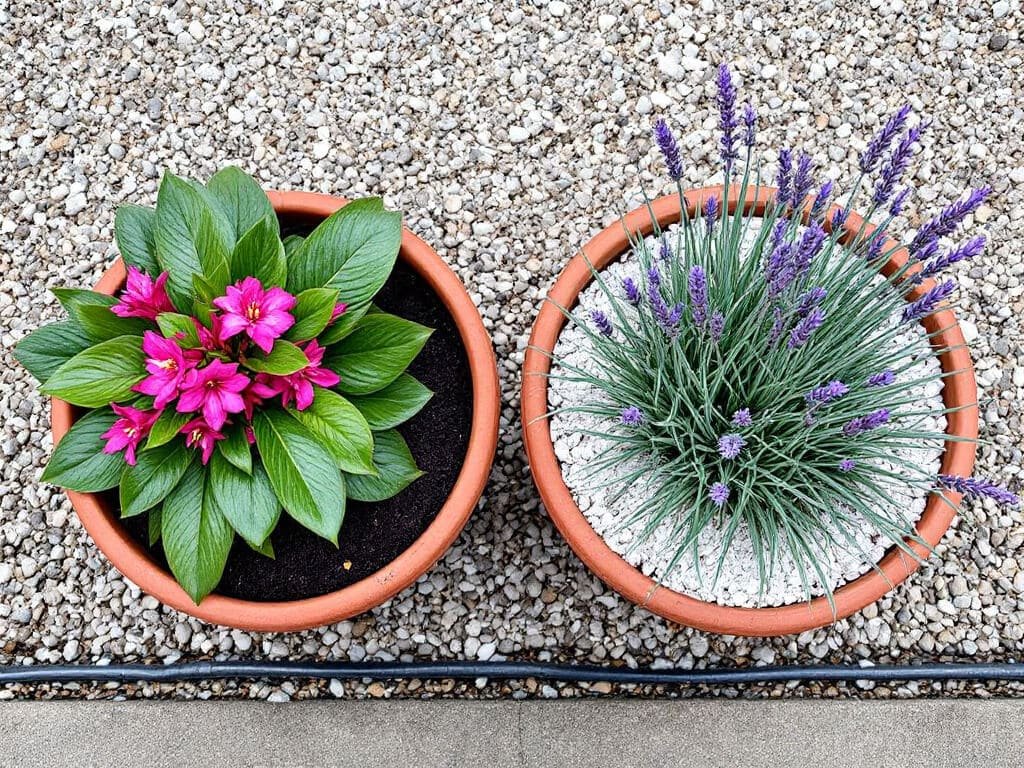
Rhododendron needs consistently moist but well-drained soil. A drought-oriented plant next to it gets watered for the rhododendron’s sake and can end up overwatered. Pick plants whose water needs match.
Plants that need waterlogged soil
The opposite problem is just as real. Rhododendron roots need moisture without stagnant, saturated soil, according to the RHS and Penn State Extension. A plant that wants soggy ground belongs in a different part of the yard.
Large, fast-growing trees planted too close
Trees set too near compete for light, water, and root space. The shade they cast can also reduce photosynthesis and slow the rhododendron’s growth. If you want canopy, use something like Cornus kousa and plant it well back.
Plants with documented pest or disease overlap
Rhododendron is prone to vine weevil, rhododendron leafhopper, scale insects, bud blast, azalea gall, and honey fungus. The sources I reviewed don’t include a verified list of plants that should never go beside rhododendron, so I won’t invent one. If a candidate plant is already a magnet for the same pests in your yard, give it more distance rather than packing it in tight.
Layout and spacing
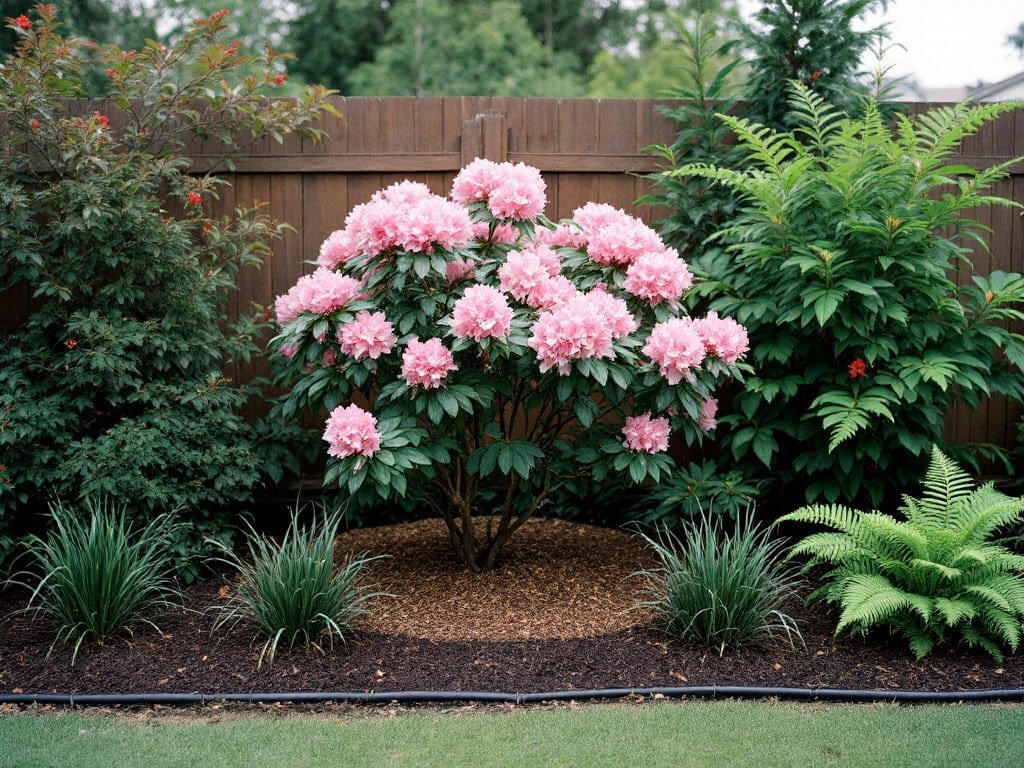
Plan the bed around the rhododendron’s mature size, not the size of the nursery pot. Put the taller shrubs behind or beside it and the low plants in front.
Back or side: pieris, camellia, or a well-sited Cornus kousa
Middle: mountain laurel, leucothoe, or andromeda ‘Compacta’, placed outside the rhododendron’s eventual canopy
Front: liriope, gaultheria, or Christmas fern, kept off the stem and crown
Soil: keep it moist but well drained, and apply mulch only after the soil is moist
Mulch: do not pile mulch against the shrub’s stem
FAQ
Can rhododendron grow with other acid-loving shrubs?
Yes. Pieris, camellia, leucothoe, and mountain laurel share the preference for acidic soil and at least some shade. Mature size and site drainage still decide whether a given combination works.
What groundcovers work near rhododendron?
The RHS identifies gaultheria and liriope as spreading plants that provide groundcover, reduce erosion and evaporative moisture loss, and suppress weeds in acidic shade. Keep them from crowding the stem or covering the crown.
Can rhododendron grow in deep shade?
Most rhododendrons prefer dappled shade over deep shade. The RHS notes that excessive shade can reduce photosynthesis, slow growth, and cause pale foliage.