
Olive Tree Companion Plants for Dry, Sunny Gardens
Choosing olive tree companion plants comes down to one rule: whatever goes next to the olive has to be fine with full sun and dry, well-drained soil. Most pairing mistakes happen when a thirsty plant gets tucked under the tree and the irrigation that keeps it alive keeps the olive’s roots wet.
The good news is that the list of plants that suit this setup is long and mostly easy to find at a regular nursery. Below are twelve that work, four kinds of plants to keep away, and a layout that keeps the tree’s trunk and roots clear.
Why pairings matter for olive tree
An olive is an evergreen tree that wants full sun in a warm, sheltered spot. It needs average moisture while it establishes, then handles drought once it is settled in. What it cannot handle is wet feet. Heavy or wet soil raises the risk of root rot, and that is the main reason companions matter here.
Outdoors, olives are generally grown in USDA zones 8–10. Some cultivars may manage in a sheltered zone 7 site. If you garden in zones 5–6, plan on a container that can move to a frost-free spot for winter. Everything in this article applies either way, but in a pot you have far less room to mix plants.
The tree also has its own pest and disease list: scale insects, olive fruit fly, olive knot, verticillium wilt, root rot, and peacock spot. Companions will not fix any of those on their own. What you can do is avoid planting things that keep the soil wet or crowd the trunk, because wet conditions and susceptible wounds favor some of those diseases.
One more practical point. Olive size varies a lot by cultivar and pruning, and the sources I’m working from don’t give one mature size. Check the tag on your tree, and use the mature spread on each companion’s label to set spacing, since that is the most reliable number you have.
Best companion plants for olive tree
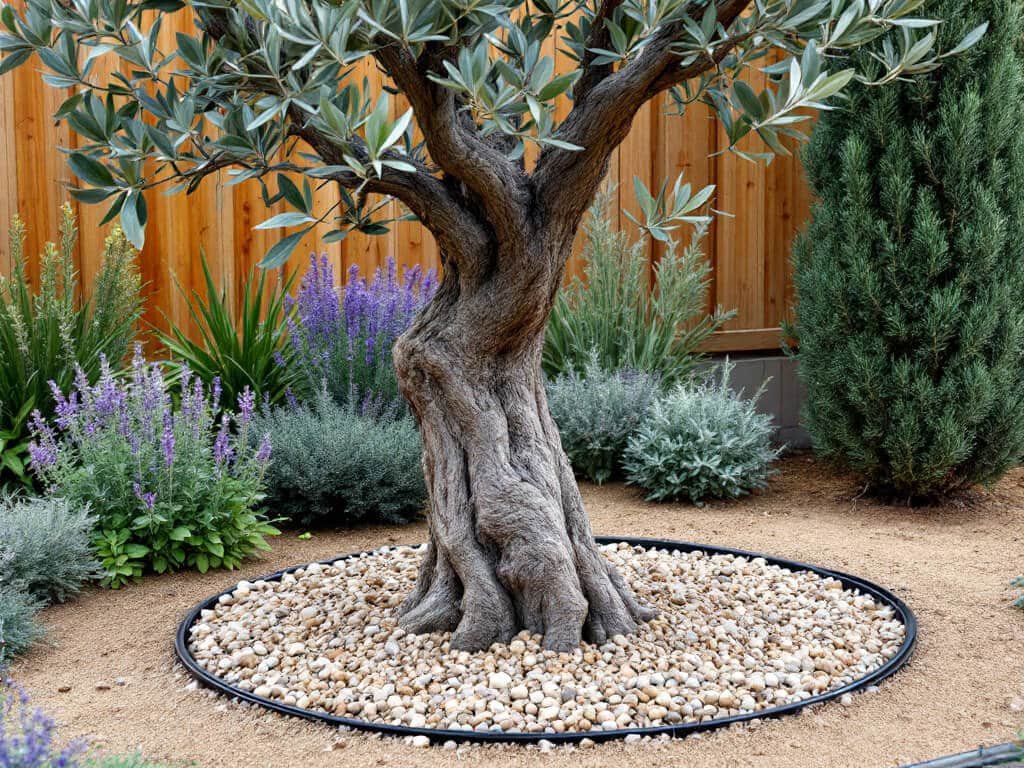
These split into two groups: perennials and herbs that sit permanently in the bed, and flowering cover plants that are better in a separate seasonal patch. For all of them, stay outside the tree’s root flare, the flared base where the trunk meets the roots.
Lavender
Lavender wants the same sun, shelter, and sharp drainage as the olive, and the RHS specifically lists it as a good combination plant. It is the first one I’d reach for. Keep it outside the root flare and use the mature spread on the plant label to decide how far apart to set it.
Catmint
Catmint suits the dry, sunny, Mediterranean-style conditions olives are grown in. It fills space around the tree without asking for extra water once it is settled. Keep it outside the root flare and follow the mature spread for your cultivar.
Cistus
Cistus is a shrub that shares the olive’s sunny, well-drained setting. It gives you a woody, evergreen-looking partner at a lower height than the tree. Allow the labeled mature spread rather than a fixed distance, since cistus varieties differ.
Rosemary
Rosemary handles heat and sharply drained soil, so it fits the same conditions. You will see claims that it repels olive pests, but the extension sources I reviewed do not verify that, so plant it because it suits the site and not for pest control. Space it by mature spread and keep irrigation away from the trunk.
Thyme
Thyme is a low grower that fits olive’s sunny, dry conditions and uses ground space without climbing into the tree. A specific benefit to olives is not verified in the sources, so treat it as a compatible filler. Plant it by mature spread and keep it off the root flare.
Agapanthus
The RHS lists agapanthus among the sun-loving plants that combine well with olives. It gives you a clumping perennial with a different shape from the silvery olive foliage. Use the cultivar’s mature width so the clumps don’t crowd the tree or each other.
Echinacea
Echinacea is another sun-loving plant the RHS lists as compatible. It forms clumps, so place it where those clumps won’t shade the olive or tempt you into frequent watering. If you find yourself dragging a hose over to it, it is in the wrong spot.
Erigeron
The RHS lists erigeron as a suitable companion for olives in sunny, well-drained plantings. It is a low, easy-going choice for the edge of the bed. Follow the mature spread of the cultivar you buy.
White mustard
White mustard comes from research on flowering ground covers in olive groves, where it helped provide habitat for pollinators and parasitoid wasps. That study does not show a universal pest-control result for home gardens, so think of it as a seasonal cover crop and not a pest solution. Sow it away from the trunk, and mow it before it starts competing with the olive for water.
Coriander
The same grove research identified coriander as habitat for pollinators and parasitoid wasps. Sow it in a separate patch, not directly against the trunk. It is a practical pick if you want something you can also cook with.
Borage
Borage was included in the olive-grove flowering-cover research as habitat for beneficial insects. It is large and spreads, so give it real room. Pull volunteer seedlings if they start to crowd the tree.
Crown daisy
Crown daisy was also part of that flowering-cover research for beneficial insect habitat. Grow it in its own flowering patch, not under the canopy. Manage it before summer, when water competition with the olive becomes a problem.
What not to plant with olive tree
The pattern is simple. Anything that needs regular water or heavy soil works against the olive. Olives cannot tolerate persistent wetness, so never share a bed with plants that keep the soil damp.
Moisture-loving plants
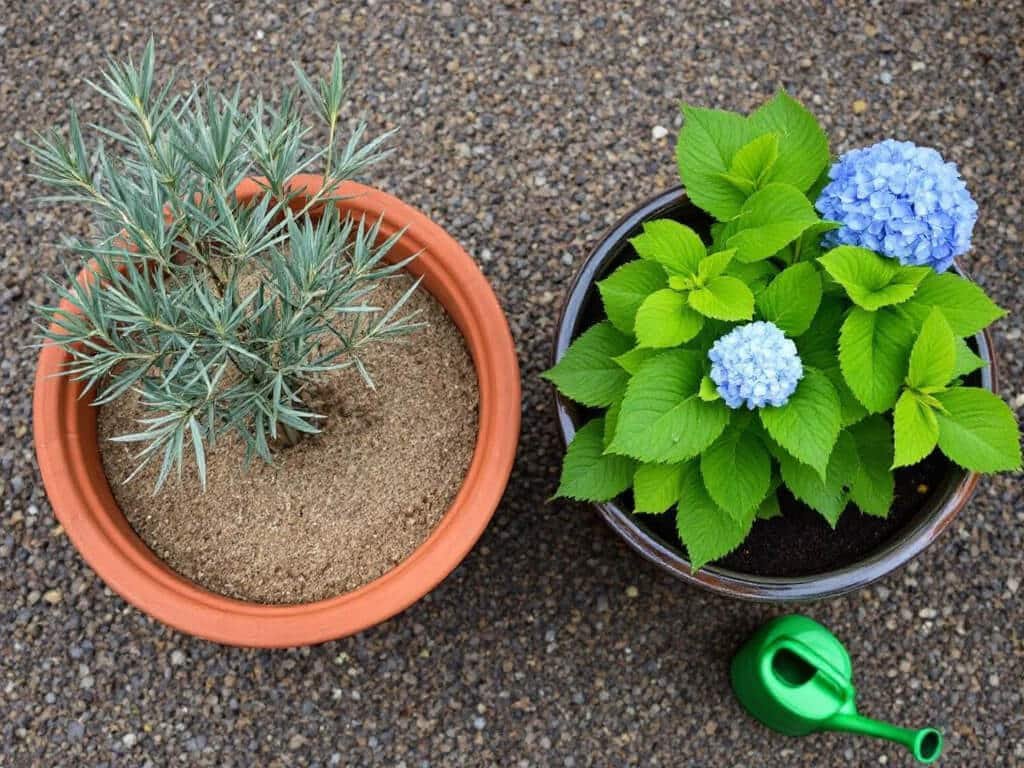
Plants that need steady irrigation can keep the soil around the olive too wet, which raises the risk of root rot. If a plant’s care instructions say “keep evenly moist,” it belongs in a different bed. Distance matters here, since the water you give a neighbor doesn’t stay put.
Plants that need poorly drained or heavy soil
Olives need free drainage, and wet soils are linked to root rot. A plant that prefers heavy, soggy ground is fighting the olive’s needs from the first day. Pick plants that like the same lean, fast-draining soil instead.
Dense, tall plantings right around the trunk
Thick, tall growth packed against the trunk can cut airflow and make it hard to inspect the root flare. That matters because olive diseases are favored by susceptible wounds and wet conditions. Keep the base visible and open so you can spot problems early.
Water-demanding annual crops
Repeated irrigation for vegetables or other thirsty annuals conflicts with an established olive’s dry-site needs. The sources don’t single out particular crops as universally incompatible, so I won’t give you a banned list. The rule is the water: if the crop needs frequent watering, grow it elsewhere.
Layout and spacing
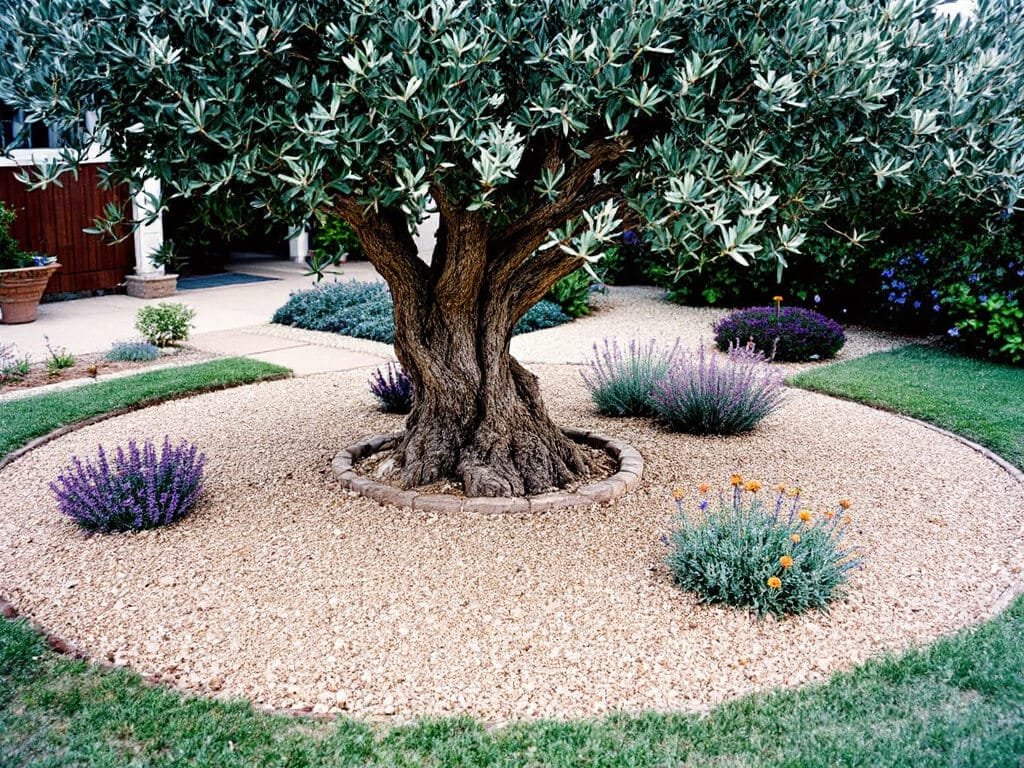
Think of the olive as the upper-story focal plant, with drought-tolerant herbs and perennials around it but not against the trunk. Because the sources give no fixed distances, spacing comes from the mature spread printed on each plant’s label.
– Put the olive in a sunny, well-drained bed, sheltered from the worst weather.
– Plant herbs and perennials around the tree, outside the root flare, never touching the trunk.
– Set each companion by its labeled mature spread, not by a standard distance.
– Keep irrigation away from the trunk and water the companions, if they need it, at their own roots.
– Grow flowering cover plants (white mustard, coriander, borage, crown daisy) in a separate patch, and mow or remove them before summer water competition starts.
– In containers, give the olive its own large pot. Combine plants in one pot only when their mature size, drainage, and watering needs genuinely match.
If you grow your olive in a pot because of cold winters, remember that flowering requires about two months at 40–50°F. That is one more reason to keep the container simple and focused on the tree.
FAQ
Can lavender grow beside an olive tree?
Yes. The RHS lists lavender as a suitable plant to combine with olives, and both like sunny, well-drained conditions. Keep it outside the olive’s root flare and allow for its mature spread.
Can olive trees grow with moisture-loving plants?
They are a poor match in most beds. Olives need well-drained soil, and wet or heavily irrigated conditions can contribute to root rot.
Can olive trees grow in USDA zones 5–9?
Most reliably in zones 8–9 outdoors. Colder zones generally need a container that can move to a frost-free location, and some cultivars in sheltered sites may work in zone 7.